

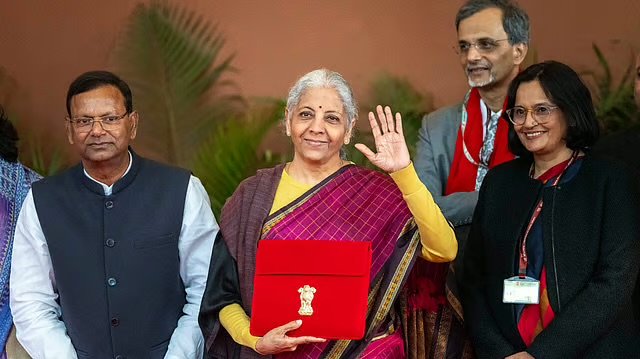
Finance Minister Nirmala Sitharaman presented the Union Budget 2026–27 in Parliament, marking her ninth consecutive Budget. Setting the tone for the year ahead, the Finance Minister stated that the “reform express is on its way”, signalling the government’s continued focus on structural reforms, inclusive development and long-term economic resilience.
Transport and tourism: strengthening India’s connectivity backbone
The Budget announced a dual-pronged strategy to accelerate economic growth through enhanced transport infrastructure and tourism development.
To improve last-mile connectivity and unlock tourism potential in remote and aspirational regions, the government will introduce a Seaplane Viability Gap Funding (VGF) Scheme. The initiative aims to mainstream seaplane operations, expand access to coastal and inland destinations, and leverage India’s extensive water bodies as drivers of local economic activity.
Complementing this push, 20 new waterways will be operationalised to promote cleaner and more cost-efficient movement of goods and passengers. On surface transport, the government proposed seven environmentally responsible high-speed rail corridors connecting major cities. These corridors are envisaged as growth enablers, reducing travel time, easing congestion and supporting sustainable urban and industrial expansion.
Medical tourism: positioning India as a global healthcare destination
To strengthen India’s standing in global healthcare, the Budget announced the creation of five regional medical tourism hubs in partnership with the private sector. These hubs will deliver world-class medical care, improve scale efficiencies and provide seamless access for domestic and international patients.
Major boost to the tourism sector
The Union Budget 2026 unveiled a comprehensive package to unlock tourism-led employment and regional development:
-
Establishment of a National Institute of Hospitality to build world-class talent and institutional capacity.
-
Creation of a National Digital Knowledge Grid for Destinations to enable data-driven planning, promotion and visitor engagement.
-
Development of ecological trek trails across India to promote sustainable adventure tourism while conserving natural ecosystems and generating local livelihoods.
-
Transformation of 15 archaeological sites into vibrant, world-class cultural tourism destinations.
-
Skilling of 10,000 tourism guides across 20 destinations to create a professional, globally competitive workforce.
-
Launch of a dedicated scheme for Buddhist circuits in the North East to strengthen spiritual tourism and preserve cultural heritage.
-
Development of five tourism destinations across five Purvodaya states to drive inclusive growth and unlock eastern India’s tourism potential.
-
Reduction of TCS on overseas tour packages to 2%, easing cash-flow pressures and lowering costs for consumers and the outbound tourism industry.
A reform-led growth agenda
The Budget reinforces the government’s commitment to infrastructure-led growth, sustainability and employment generation. With a strong emphasis on connectivity, tourism, healthcare and skills, Union Budget 2026 lays the foundation for balanced regional development and positions India for the next phase of economic expansion.
New opportunities
She also unveiled a national digital destination registry to comprehensively document cultural, spiritual and heritage sites, paving the way for new opportunities for researchers, historians, content creators and technology partners.
Sitharaman emphasised India’s strong potential in adventure and ecotourism, announcing plans to build ecologically sustainable mountain trails in Himachal Pradesh, Uttarakhand, Jammu and Kashmir, Araku Valley in the Eastern Ghats, and Pothigai Malai in the Western Ghats. The government will also upgrade 15 archaeological sites into major cultural destinations, reinforcing India’s heritage tourism ecosystem. Additionally, the budget outlined a creative-skilling push through the establishment of ABGC content-creator labs in 1,500 schools and 500 colleges, aiming to nurture a new generation of storytellers capable of amplifying India’s tourism narrative at home and abroad.