

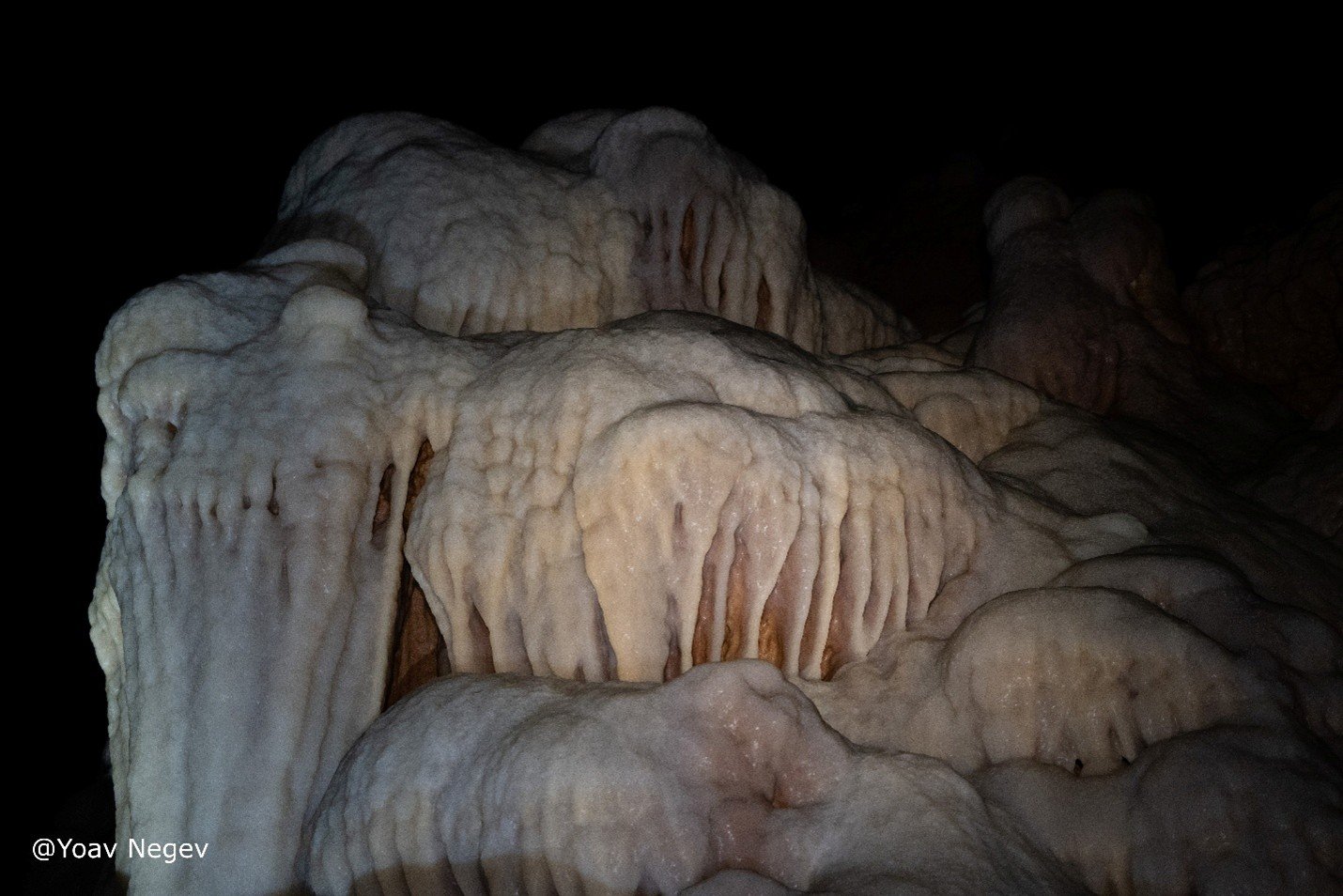
As part of ongoing research activities by the Cave Research Center at the Hebrew University of Jerusalem, an extraordinary cave has recently been discovered near the settlement of Ofra in Judea and Samaria. The newly identified cave contains the largest underground chamber ever found in Israel, measuring approximately 88 metres in length, 75 metres in width, and around 40 metres in height.
Ofra is located within a highly developed karst basin, an area known for an exceptional concentration of geological formations such as pits and caves. Numerous karst caves have previously been documented in the region, some richly adorned with stalactites and stalagmites, reinforcing Ofra’s reputation as one of Israel’s most geologically significant areas.
The newly discovered cave displays an extraordinary abundance of advanced cave deposits, including dramatic stalactites and stalagmites, massive “elephant ear” formations, pool deposits, and rare crystal structures. Experts describe the cave’s features as exceptionally unique, even by the high standards of the Ofra area, which is widely regarded as one of the most remarkable regions in Israel for subterranean phenomena.
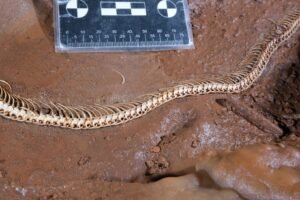
Professor Amos Frumkin, Director of the Cave Research Center at the Institute of Earth Sciences, Hebrew University of Jerusalem, stated that there is no evidence of prior human entry into the cave. However, the discovery of a snake skeleton at the bottom suggests that animals have fallen into the chamber. The cave was discovered by a dedicated team of cavers — Vladimir Boslov, Raz Ben Yair, Reuven Zakai, Yuri Lisovic, and Yoav Negev — who invested extensive effort to safely rappel into the site.
“This is the largest chamber ever discovered in Israel,” Professor Frumkin said. “It is richly decorated with impressive stalactites and stalagmites that constitute protected natural treasures of immense scientific value. Preserving the cave is essential, as it may allow for public access in the future. At present, however, entry is extremely dangerous and strictly prohibited.”
The Cave Research Center further announced plans to establish a cave park in the Ofra area, aimed at preserving the region’s unique karst landscape, including its dissolution features and caves. Currently, visitors can observe these phenomena primarily from above ground, or by entering the nearby Chinese Pit, which descends to a depth of 60 metres and is equipped with an accessible ladder system suitable for visitors without climbing or rappelling experience.
The discovery marks a major milestone in Israeli speleological research and underscores the importance of preserving the country’s rare and fragile underground heritage.