

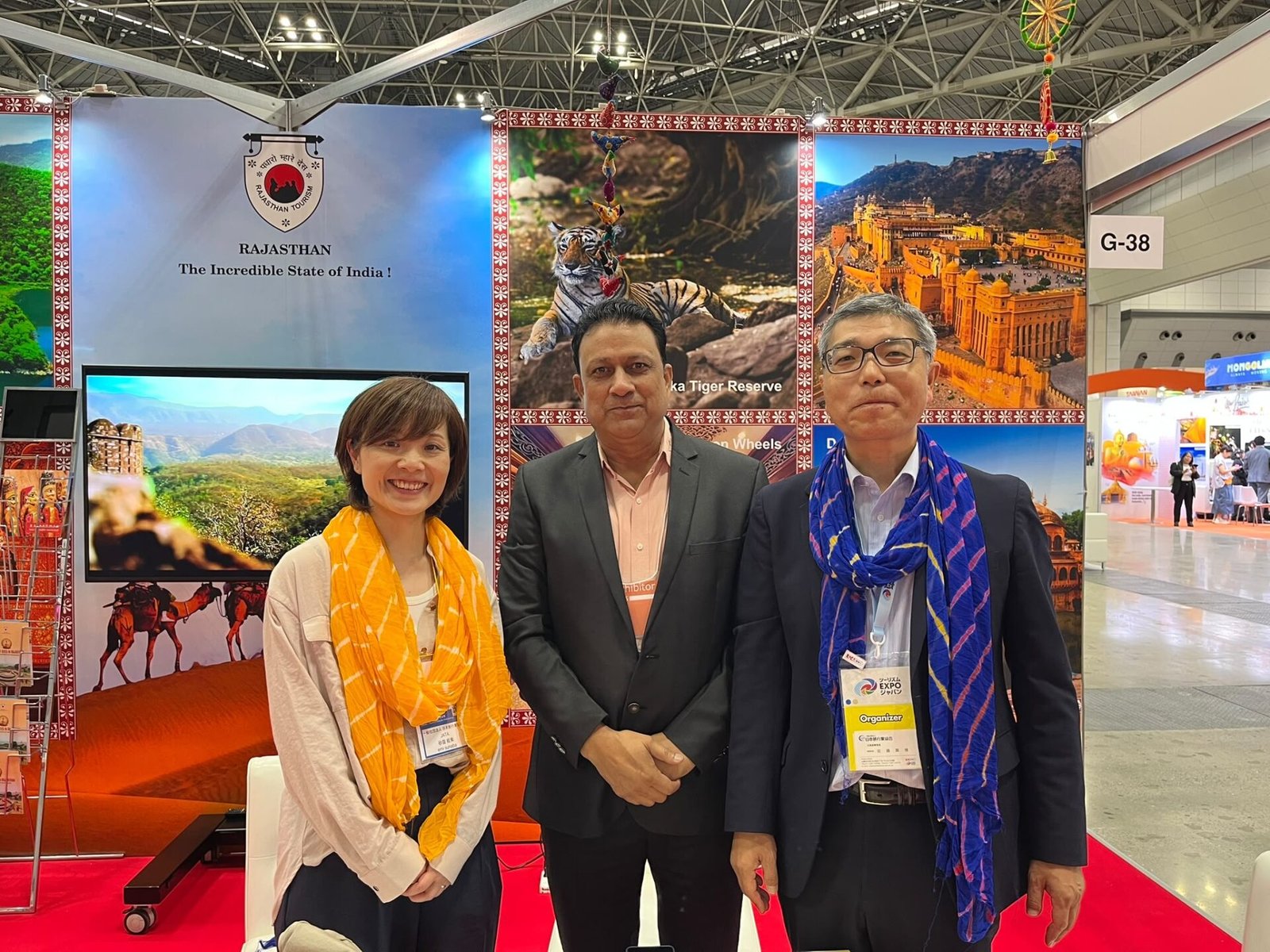
Rajasthan’s lesser-known destinations, wildlife, rural tourism and Buddhist heritage emerged as key areas of interest among Japanese tour operators and travel trade representatives on the second day of Tourism EXPO Japan 2026 in Tokyo. During a series of B2B meetings, the Rajasthan Tourism Department showcased destinations and experiences beyond the state’s traditional forts, palaces and royal heritage.
Led by Tourism Secretary suchi Tyagi, the Rajasthan Tourism delegation, including Joint Director Ajay Sharma, held discussions with Japanese tour operators and travel industry representatives on expanding tourism opportunities in the state. The meetings focused on experiences combining heritage with nature, wildlife, rural life, folk culture, handicrafts and local cuisine.
Along with established destinations such as Jaipur, Udaipur, Jodhpur and Jaisalmer, the tourism potential of Shekhawati, Hadoti and other lesser-known regions was also highlighted. The department emphasised experiential tourism products that could cater to the interests of Japanese travellers seeking deeper cultural and local experiences.
Rajasthan’s Buddhist Heritage Finds Interest
Rajasthan’s Buddhist heritage also featured prominently in the discussions. The delegation highlighted the ancient Buddhist caves at Kolvi in Jhalawar district, a lesser-known heritage site in the Hadoti region. The rock-cut caves feature stupas and a large image of the Buddha, while Buddhist caves are also found in the nearby areas of Vinayaka and Hathigaon.
The Kolvi caves offer an opportunity to present a different dimension of Rajasthan’s cultural heritage to the Japanese market, linking the state’s historical landscape with its Buddhist legacy. The site is recognised by Rajasthan Tourism as an important Buddhist heritage attraction in the state.
Japanese Students Explore Exchange and Stay Opportunities
The second day of the expo also saw interest from Japanese students and representatives associated with universities. They sought information about student exchange programmes, educational visits and opportunities for longer stays in Rajasthan to experience the state’s culture and way of life.
Enquiries were also received about programmes involving stays in Rajasthan and opportunities to experience folk arts, handicrafts, rural life and local traditions. The interaction opened up possibilities for strengthening academic and cultural exchanges alongside tourism.
The Tourism Department highlighted that Rajasthan offers much more than its iconic forts and palaces. Its wildlife sanctuaries, rural destinations, folk traditions, handicrafts, religious and spiritual sites and diverse cultural experiences provide a wide range of options for international travellers.
The B2B meetings on the second day of Tourism EXPO Japan 2026 reflected growing interest among Japanese travel stakeholders in Rajasthan’s lesser-known and experience-based destinations, alongside its established tourism attractions. The department is using the expo to present this wider range of tourism experiences to the Japanese market.