

We think most people visit Pondicherry with a very specific thought before they visit which includes the French town, yellow walls, good coffee, nice photos. But Pondicherry has its own way of breaking the stereotypes right upon our first impression. We started realising that this place is more than something you never thought to look for. When France left Pondicherry in 1954, the culture didn’t leave with them. It stayed, as time went by it slowly, quietly became something entirely new. “Independence may have changed the flag. It certainly did not change the food, the architecture, or the people.”
The Canal That Splits the Town — And Explains Everything
There’s a canal running along Goubert Avenue that detaches the old town into two different worlds. We didn’t fully believe this until we first crossed it, “the canal not just divides the town geographically — it divides it visually, culturally, and completely.”
On the French side — White Town —that reveals pastel villas, the mustard-yellow walls, bougainvillea everywhere, arched windows, and streets named Rue. This makes the town visually distinct from any other town in India.” On the Tamil side, Homes are built around Mutrams — open central courtyards designed to pull in light and air — and Thinnais, which involves these raised stone verandas being built for people to sit and relax with their neighbours.
But especially the houses built by wealthy Tamil merchants amazed us the most. Ground floor in traditional Tamil style for the family. First floor in European style for business and guests. This combined the two cultures in single building
The Food Here Has Actual History Behind It
Pondicherry has a unique cuisine that exists nowhere else in India, a food tradition that evolved organically over centuries making it an entirely regional specific cuisine. It
Originally a Tamil sun-dried spice preparation first emerged in local agricultural tradition, it later got modified during the French colonial period by the way of adding the shallots and garlic. This transformed result got recognition in European fine dining. However, the original Tamil version continues to be produced in Pondicherry using those authentic traditional methods.
The fish curry has the same kind of shared heritage — coconut milk base, full South Indian spice flavour, but this gentle, but yet reflects French culinary influence in its texture and composition. And the bakeries are just something else entirely. Unlike other colonial towns in India where European food culture disappeared after independence, Pondicherry’s French bakery tradition has remained intact and continues to function as an active part of the local food economy.”
The People Are Where the Culture Really Lives
Walking through the old quarters, the first thing that hits is the sound of people effortlessly shifting Tamil into French mid-sentence, then answered in English, then back to Tamil. Thus, shows how language functions in this town.
There’s a community here called the Franco-Pondicherrians —community represents one of the most historically significant outcomes of French colonial presence in India — a group of people who hold French citizenship, carry Tamil heritage, and embody a cultural identity that is not the result of colonisation alone but shoes their coexistence —over generations through shared neighbourhoods, intermarriage, and a daily life that absorbed both cultural influences equally.
Our favourite detail we’ve noticed from the entire trip is the Pondicherry Police wore bright red French-style képi caps, even decades after France left in 1954.Because it had become part of who they were. That one detail tells everything about the relationship and its impact the French culture has upon the town
Even the Beach Feels Different Here
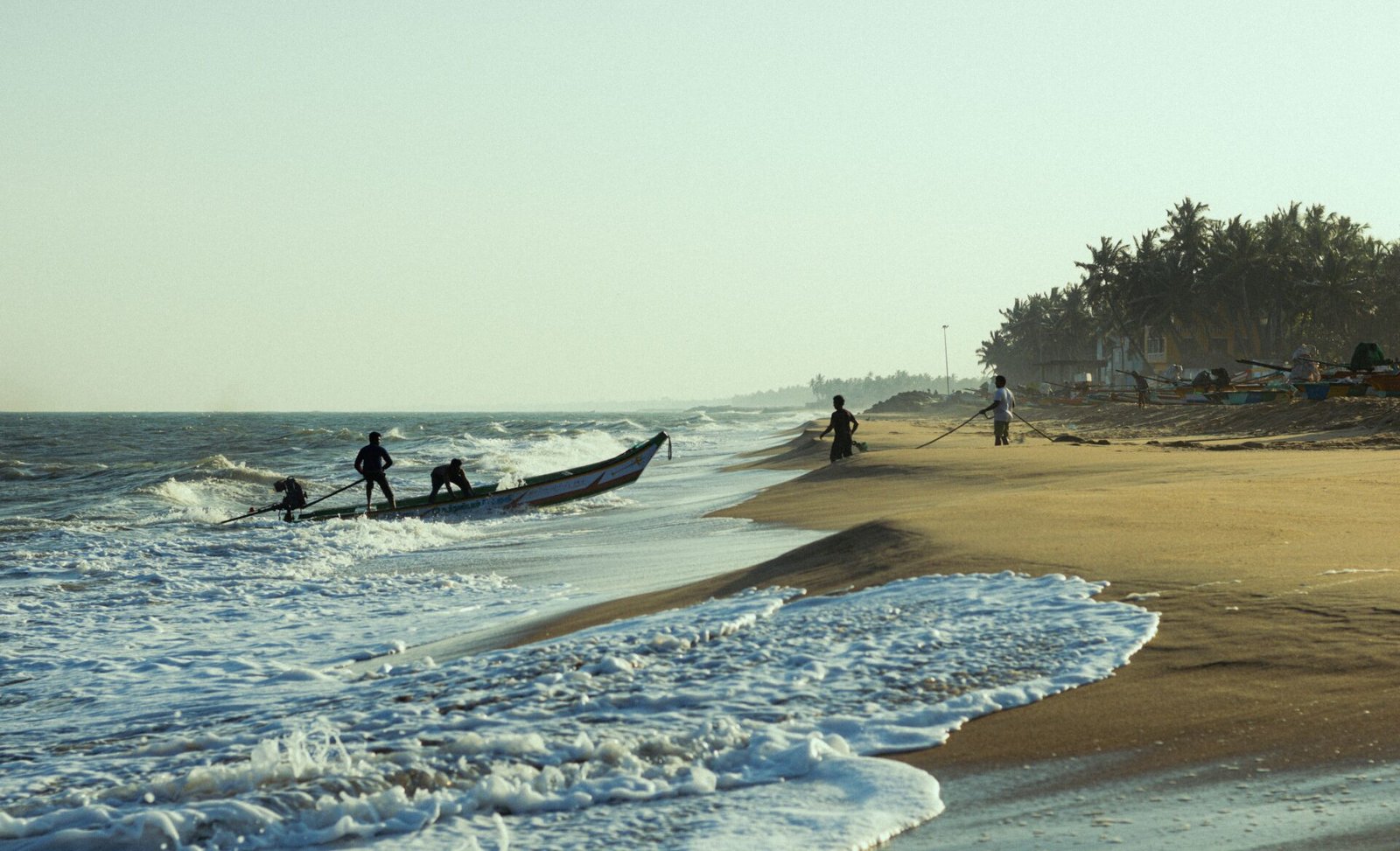
Even Pondicherry’s coastline reflects its broader cultural identity. Each evening the town’s residents make their way here — not for any organised event, not driven by tourism, and not out of novelty. It is civic habit that has been followed for generations . People arrive, occupy the low sea wall, watch the water shift in the fading light, exchange words or sit in comfortable silence, and leave. This remains unchanged despite the town’s transformation.
The street names are still French. The coffee is still Tamil. The spice in the kitchen crossed two continents before residing here.The sea wall still attracting people just out habit and no reason whatsoever.