

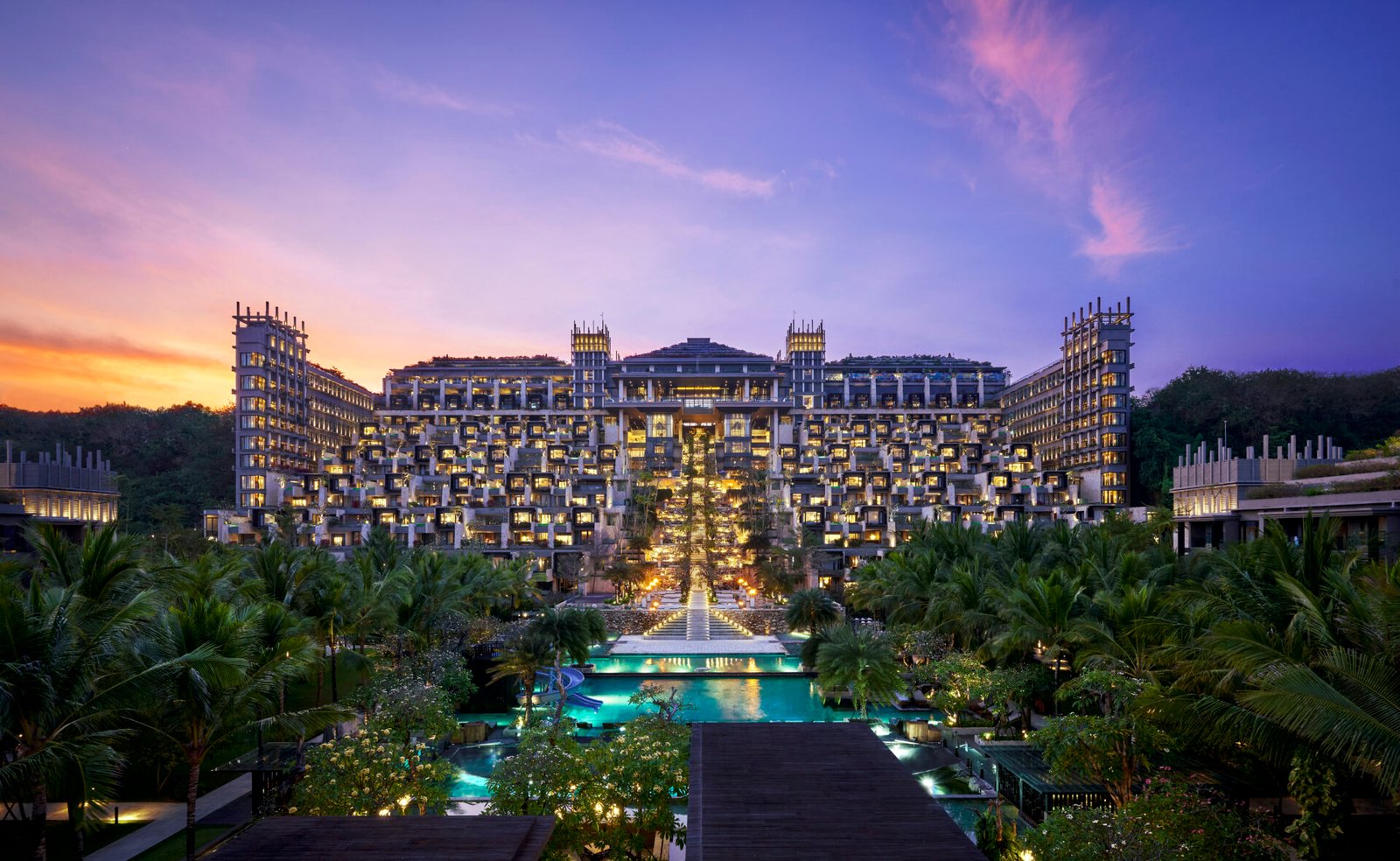
At The Apurva Kempinski Bali, Indonesian craft, theatrical architecture and immersive dining unfold high above the Indian Ocean.
By Misbaah Mansuri
Some hotels disappear into Bali. The Apurva Kempinski Bali does precisely the opposite. Arriving at the resort in Nusa Dua, there is little attempt at understatement. The property rises dramatically from the cliffside before cascading towards the Indian Ocean in a succession of terraces, pools and gardens. From the soaring open-air lobby, the view falls towards an immense staircase and, eventually, a horizon so blue it seems almost painted into place.
Yet the scale is not simply there for effect. The resort was conceived as a celebration of Indonesia, its architecture drawing from the country’s temples, traditional villages and terraced landscapes. Designed by architect Budiman Hendropurnomo of Denton Corker Marshall, the property uses stone, timber, water and monumental proportions to create something that feels less like a conventional beach resort and more like a contemporary Indonesian palace.
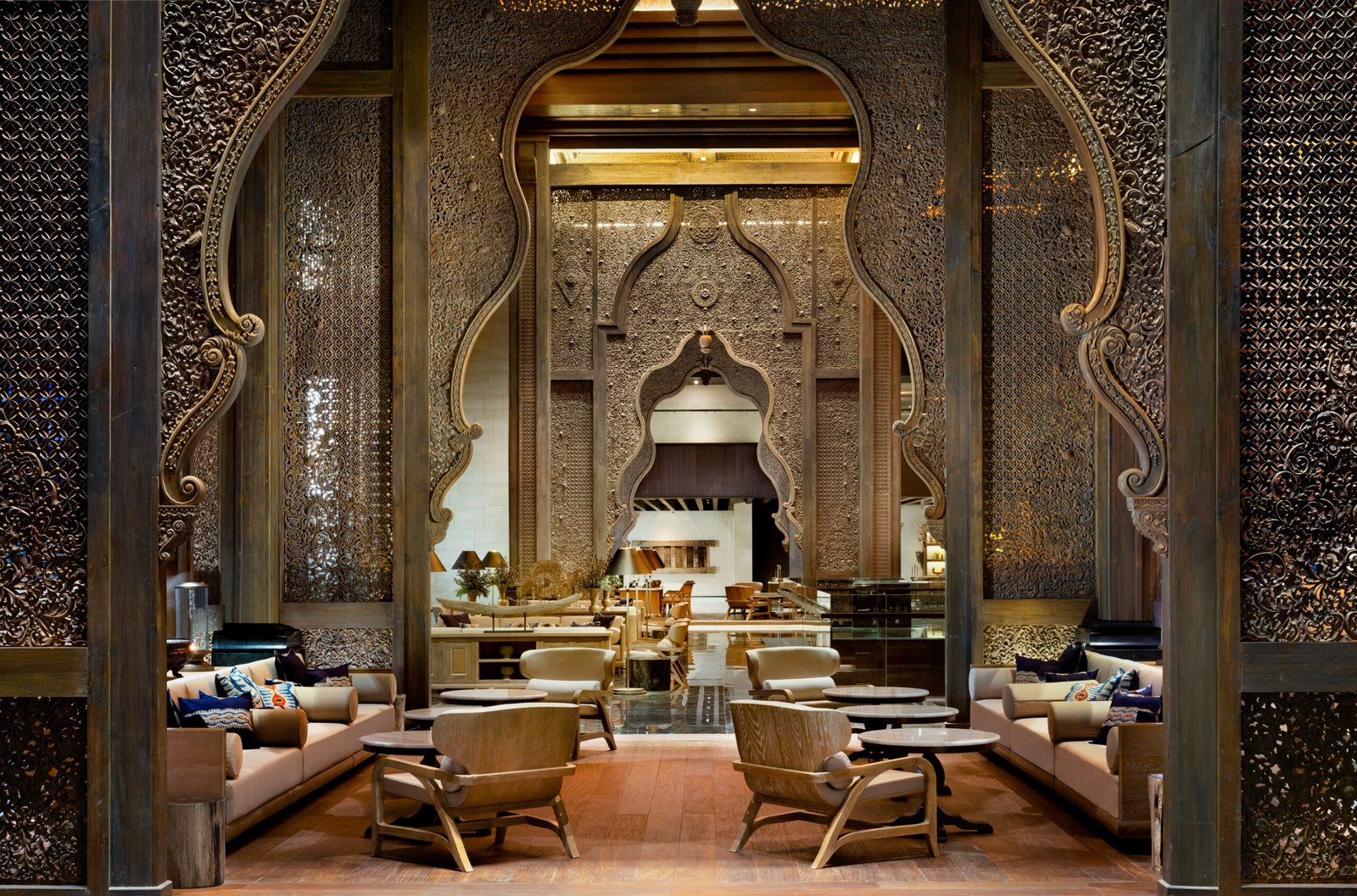
The lobby is perhaps the clearest expression of this. Vast columns rise towards an intricately patterned ceiling while enormous openings frame the ocean beyond. Indonesian craftsmanship appears throughout, from carved stone and timber to woven textiles and sculptural details. Even in a resort of this size, the hand of the artisan never feels far away.
Checking in
At 100 square metres, the suite felt generous without becoming cavernous. Warm woods, intricate Indonesian detailing and tactile fabrics softened the contemporary interiors, while floor-to-ceiling windows ensured the Indian Ocean remained the real focal point.
The bedroom flowed naturally into the living space, but it was the private terrace that changed the character of the room completely. Outside, our plunge pool sat suspended above the resort, offering the luxury of slipping into the water without leaving the privacy of the suite.
Mornings were particularly beautiful. Curtains opened to blue sky and ocean, while sunlight moved gradually across the terrace and pool. It became tempting to postpone plans simply to stay there a little longer.
Guests staying in the Cliff accommodation also receive access to the Cliff Lounge, which gives this enormous resort an unexpectedly intimate dimension. The lounge has its own infinity pool and hydro jet pool, but it was breakfast that made us return each morning. Served until noon, it immediately removes one of the least appealing rituals of resort life: waking up early simply because breakfast is about to end.
Instead, mornings unfolded slowly over fresh fruit, pastries, coffee and beautifully prepared hot dishes, with the ocean stretching beyond the windows. There were all-day refreshments, afternoon tea and evening cocktails too, allowing the lounge to function almost as a quieter hotel within the hotel. For a property built on such impressive scale, having somewhere that feels calm and residential makes all the difference.
Beneath the surface
If there is one experience that captures The Apurva’s appetite for spectacle, it is Koral Restaurant. Bali’s first aquarium restaurant could very easily have relied on novelty alone. Instead, it manages to turn an extraordinary setting into one of the resort’s most memorable experiences.
The light changes first. Everything takes on an aquatic blue as enormous windows reveal fish gliding silently through the water beside you. At its most dramatic tables, the aquarium extends overhead, placing diners beneath a tunnel of marine life. Shadows ripple across the room as fish move above your head, and for a few moments it is difficult to concentrate on anything else.
Then the food arrives. That matters because a dining room this spectacular creates a difficult challenge for any chef. When your backdrop is a living aquarium, the cooking needs enough personality to prevent dinner becoming merely an elaborate photo opportunity. Under Michelin-starred Executive Chef Jean-Baptiste Natali, Koral succeeds.
The cooking is precise and contemporary, built around premium and locally sourced ingredients rather than unnecessary complication. Seafood feels naturally at home in the setting, treated with enough restraint that texture and freshness remain at the centre of each plate. Sauces bring intensity without drowning delicate flavours, while plating has the refinement expected of fine dining without trying to compete visually with the room.
What surprised me most was how quickly the spectacle became peaceful. Once the initial excitement faded, watching marine life drift slowly past the table became strangely hypnotic. Conversation softened. Courses arrived at an unhurried pace. Every so often a particularly striking fish would glide past and momentarily steal everyone’s attention. There are countless restaurants designed to be photographed. Far fewer create a genuine sense of place once the camera is put away. Koral does. By the end of lunch, the aquarium no longer felt like a backdrop. It had become part of
the rhythm of the meal.
Above the ocean
The resort’s relationship with the horizon continues at Pala Rooftop Bar. In the late afternoon, the rooftop is one of the best places to appreciate the sheer scale of The Apurva. From here, you can look back towards its vast architecture and out towards the Indian Ocean, with the changing light gradually softening the stone façade.
Cocktails arrive as the heat begins to lift from the day. There is something almost cinematic about sitting here as Nusa Dua changes colour around you. The brilliant blues of afternoon become warmer, the ocean darkens and lights begin appearing across the resort’s terraces.
It is a completely different energy from Koral below. There is no need for elaborate entertainment. A good drink, an ocean view and the slow disappearance of daylight are enough. And perhaps that is when the architecture makes the most sense. The resort is dramatic during the day, but around sunset its scale softens, becoming less monumental and considerably more romantic.
The spa
The following morning brought another change of pace at Apurva Spa, perched high within the resort overlooking the ocean. Its philosophy is rooted in the ancient Sanskrit principle rupasampat wahyabiantara, which centres on the idea that true beauty is achieved when the inner and outer self exist in harmony.
Our 60-minute Gending Apurva treatment translated that philosophy into something much more tangible. After days of travelling, my body was carrying the familiar residue of movement: tight shoulders, tired legs and the peculiar restlessness that comes from never quite unpacking before moving again.
The treatment worked slowly through that tension. Rather than relying on elaborate wellness technology or unnecessary theatre, the experience centred on touch. Rhythmic movements and intuitive pressure gradually loosened tired muscles, while the quiet treatment room allowed everything beyond it to recede. There was a point midway through when I noticed my breathing had slowed completely.
That, to me, is always the measure of a good massage. Not how complicated the ritual sounds on paper, but whether somewhere during it you stop thinking about everything waiting outside the room. Here, I did. By the time the treatment ended, the monumental resort beyond the spa seemed strangely distant.
In a nutshell
The Apurva Kempinski Bali is not interested in being anonymous. Its architecture is bold, its scale extraordinary and its celebration of Indonesia deliberately visible. Yet reducing it to spectacle would miss what makes the property interesting. The most memorable moments happen when that grandeur becomes personal.
It is waking in a Cliff Private Pool Ocean Junior Suite and stepping outside to see the Indian Ocean before doing anything else. It is letting breakfast stretch towards noon at the Cliff Lounge because there is nowhere you urgently need to be. It is watching a school of fish glide silently overhead between courses at Koral. It is feeling the tension of travel gradually disappear beneath the hands of an excellent therapist at Apurva Spa. Even Pala Rooftop reveals another version of the same hotel, transforming monumental architecture into a backdrop for something as simple as watching the sun go down.
Bali has no shortage of beautiful resorts, and many choose to whisper. The Apurva Kempinski Bali chooses a different language. It celebrates scale, craftsmanship and Indonesian identity with confidence, then creates intimate spaces within that grandeur where you can retreat from it all. You arrive looking at the architecture. You leave remembering how surprisingly personal life inside it can feel.