

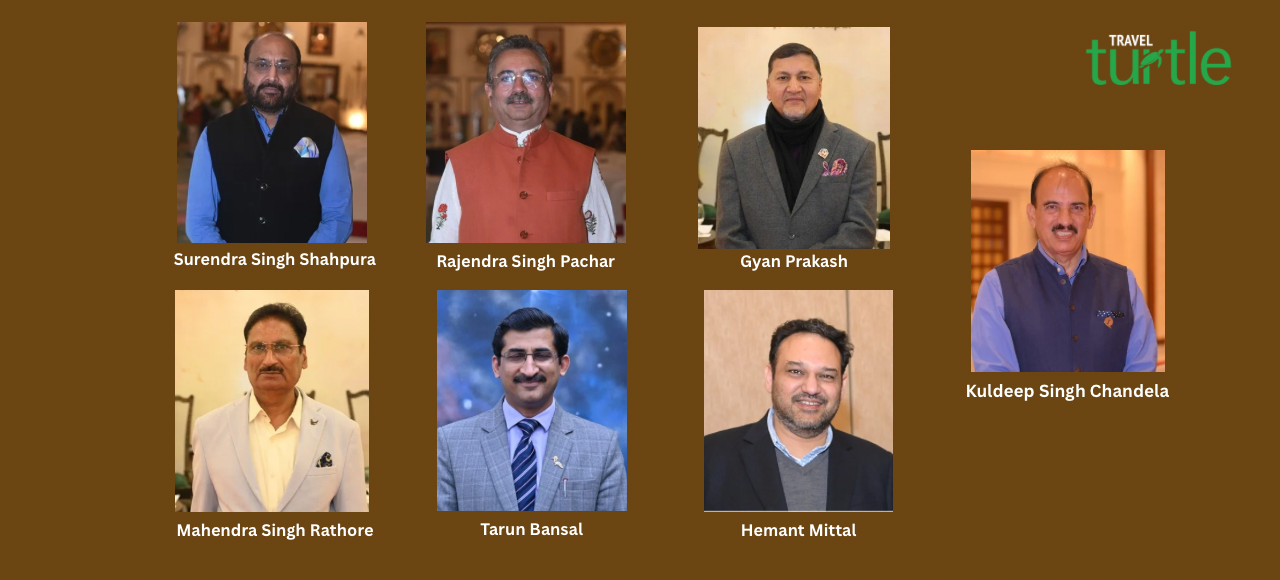
As Rajasthan expands beyond its iconic forts and palaces with RDTM and the inaugural Marwar Travel Mart, FHTR executive members put emphasis on spotlighting the lesser-known destinations, MICE, experiential tourism, local artisans and the distinctive cultural flavours of the state’s districts.
Srishti Mukherjee
For decades, Rajasthan’s tourism story has been centred around its forts, palaces and royal heritage but as the tourism landscape witnesses a continuous shift, the state is increasingly aiming to build a much broader tourism proposition. And this proposition extends from MICE and weddings to rural, eco, adventure and experiential travel, while putting emphasis on destinations and experiences beyond its familiar circuits. This shift is now becoming more regional, with tourism promotion moving beyond the traditional Jaipur-Jodhpur-Udaipur narrative to bring individual districts and their tourist spots into sharper focus. And the sixth edition of Rajasthan Domestic Travel Mart (RDTM) in Jaipur reflects this evolution. The event that is set to be hosted from September 17-19 will be followed by the inaugural Marwar Travel Mart in Jodhpur from September 20-22.
Organised by the Federation of Hospitality & Tourism of Rajasthan with the support of the Department of Tourism, Government of Rajasthan, the two marts are poised step further into this regionalisation.
RDTM, MTM and state tourism
While RDTM is known to bring the state’s tourism and hospitality ecosystem together, the new Marwar Travel Mart is largely focused on unlocking the tourism potential of the Marwar-Thar region across heritage, destination weddings, cultural and experiential travel, desert adventures, luxury hospitality and rural tourism. Its focus on the lesser-known destinations and experience-led itineraries hint at a Rajasthan that is looking to make the travellers stay longer and experience the state beyond its postcard destinations.
Surendra Singh Shahpura, President, FHTR shares the intent behind RDTM and MTM and suggests, “RDTM and MTM extends beyond the B2B exchange between prominent tour operators, hoteliers, destination wedding planners and other members of the associations. With cultural evenings planned around local dances, flavours, tradition and the region’s living heritage and greater attention to local artisans and home-grown experiences, RDTM and MTM aim to position the state as a destination that houses a collection of distinct regional stories that travellers can experience at their own pace.”
Furthermore, he believes that this year’s RDTM and Jodhpur Travel Mart would present a particularly exciting opportunity. “For the first time, the Rajasthan travel trade is taking the Mart beyond Jaipur and introducing Jodhpur as an additional host city,” he shares.
New business opportunities
Rajendra Singh Pachar, Senior Vice President, FHTR, says, “Traditionally, RDTM has always been organised in Jaipur, naturally placing the focus on Jaipur as the gateway and the city is showcased to visiting buyers. This year, however, the addition of three more days in Jodhpur as an extension of the Mart creates an opportunity to introduce buyers to another major tourism city of Rajasthan and, more importantly, to the wider Marwar and Thar Desert region and the breadth of products and experiences it offers.”
Gyan Prakash, Vice President, FHTR, adds, “This will give buyers an opportunity to discover Jodhpur’s hotels, heritage properties, MICE facilities, culinary offerings, cultural experiences, local crafts and newer tourism products, while also experiencing the distinctive offerings of the Thar Desert region like its desert landscapes, villages, crafts, culture, wildlife, experiential stays and unique ways of life. We hope this exposure will generate fresh interest, new enquiries and eventually more business for the hotels, DMCs, experience providers and the wider travel ecosystem across Jodhpur, Marwar and the Thar region. More broadly, we hope RDTM and Jodhpur Travel Mart create meaningful B2B connections and long-term partnerships between Rajasthan’s travel trade and buyers from India and overseas.”
Mahendra Singh Rathore, Vice President, FHTR, “Most importantly, we see this two-city format as a beginning. If we can take the Mart to different cities and regions of Rajasthan in the future, we can progressively introduce buyers to the many different tourism propositions of the state, creating business opportunities not just for the established destinations but also for emerging and lesser-known ones.”
Deeper dive into Rajasthan
Tarun Bansal, Secretary General, FHTR, highlights that FHTR would like travellers to venture beyond the well-known monuments and established tourist circuits and discover the Rajasthan that lives behind them. “Our rural landscapes, living craft traditions, local communities, folk music, traditional cuisines, heritage villages, stepwells, havelis, pilgrimage centres and conservation initiatives offer enormous potential,” he shares.
Furthermore he adds, “Rajasthan lives far beyond its palaces and royal culture. From the Orans and desert ecology of western Rajasthan to the living crafts of Marwar, the tribal and rural landscapes of southern Rajasthan, the pilgrimage traditions of Pushkar and Ajmer, and the lesser-known heritage of Hadoti, there is a vast expanse of the state that is still waiting to be explored.”
Beyond destination tourism
Talking about the one key change that the members of FHTR would like to see in Rajasthan in the future, Hemant Mittal, Joint Secretary, FHTR shares, “We would like to see a shift from ‘destination tourism’ to ‘immersive, experiential and responsible tourism.’ Rajasthan should not be experienced only through its famous forts, palaces and monuments. We need travellers to stay longer, travel deeper and discover the people, stories, traditions, landscapes and living culture that make each place unique. At the same time, we would like to see a much stronger culture of responsible tourism with more aware travellers and stakeholders who use less plastic, do not litter, respect the environment and local communities, and consciously support and promote local arts, crafts, artisans and products. Tourism should create value for the destinations and the people who call them home, rather than simply bring footfall.”
Meanwhile, Rajendra Singh Jodha, Treasurer, FHTR, reveals, “A lot of tour operators continue to sell Rajasthan based on what they remember from the past 10-15 years. Rajasthan has never been stagnant and has constantly added new attractions, destinations, and experiences. Bringing these tour operators to RDTM and letting them meet and see the new offerings is sure to update their perception and knowledge about our products, thereby encouraging them to sell the destination more confidently. We really are losing out on a lot of MICE movements because of a lack of suitable facilities in cities other than Jaipur. Repeat business is almost impossible from the same client if they have already been to Jaipur. We must create venues that can hold events for 5000 people at the same time in Jaisalmer, Jodhpur and Udaipur. This one step will help bring large movements to the state.”
Role of FHTR
While concluding, Kuldeep Singh Chandela, Imm. Past President, FHTR, adds that FHTR can play a crucial role by bringing the industry together to identify, develop and promote new experiences, particularly in lesser-known destinations, while also encouraging responsible tourism practices across the sector. He highlights, “It can facilitate collaboration between the government and private sector, create awareness among tourism stakeholders, encourage sustainable practices and promote local communities and their traditional arts and crafts as an integral part of Rajasthan’s tourism offering.”
Ultimately, the state’s greatest tourism asset is its people, their culture and the living traditions of the state. If the people, stories, authentic experiences and responsible practices are put together at the heart of tourism, Rajasthan can move from being a destination that travellers simply visit to one that they truly connect with, respect and remember.