

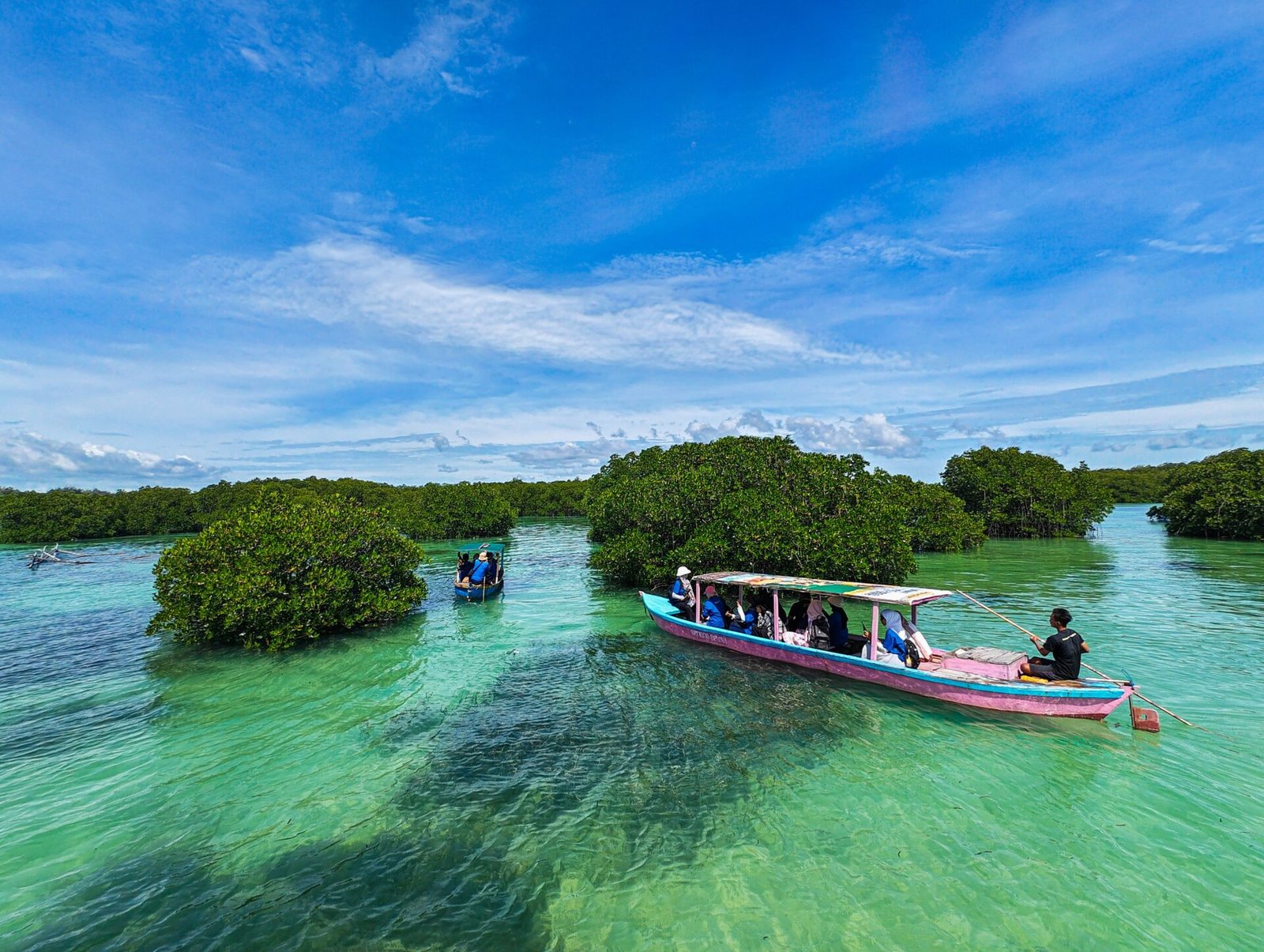
Reaffirming the State Government’s commitment to environmental stewardship, climate resilience, and sustainable development, the Department of Tourism, Government of West Bengal, in association with the District Administration, South 24 Parganas, observed World Mangrove Day 2026 at Taj Ganga Kutir, Raichak.
The state-level event brought together key policymakers, administrators, environmental experts, tourism stakeholders, and local community representatives to highlight sustainable tourism as a vital catalyst for mangrove conservation and the growth of a robust Blue Carbon Economy.
Key Highlights & Keynote Address Delivering the keynote address, Dr. Shankar Ghosh, Hon’ble Minister-in-Charge, Tourism Department and Parliamentary Affairs Department, stated that economic progress and ecological conservation must advance hand in hand.
“The Sundarbans represents one of the world’s most valuable ecological assets. Mangroves are nature’s most effective carbon sinks, holding carbon beneath the soil for thousands of years—or even forever if undisturbed—and serving as our first line of defence against tropical cyclones, coastal erosion, and saline intrusion,” remarked Dr. Ghosh. “Protecting these ecosystems lies at the very heart of the Blue Carbon Economy. Future tourism in the region must transition toward a high-value, low-impact model that respects its ecological carrying capacity.”
Major Announcements by the Hon’ble Minister:
• Comprehensive Development Plan: The State Government proposes to prepare a holistic plan integrating tourism infrastructure, inland water transport, road connectivity, and conservation efforts without compromising the fragile ecosystem. This will involve departments such as Sundarban Affairs, Forest, Fisheries, Transport, and the District Administration.
• One Traveller One Mangrove – The Blue Carbon Ambassador Programme (BCAP): A Journey That Leaves Roots Behind: The Department proposes launching the “One Traveller One Mangrove” programme, transforming every visitor into an active conservation partner. Tourists visiting the Sundarbans will be encouraged to plant a mangrove sapling as part of their travel experienceand will receive a Certificate of Appreciation, recognizing their personal contribution toward climate resilience, ecosystem restoration, and the Blue Carbon Economy. Turning mangrove restoration into an active visitor experience allows every traveler to forge a special bond with the region.
• Flagship Destinations: Darjeeling and the Sundarbans have been proposed as West Bengal’s flagship destinations under the Government of India’s “One State, One Global Destination” initiative.
• River Tourism & Alternative Water Transportation: Alongside enhancing road connectivity to the Sundarbans, the Department, in collaboration with the Transport Department, plans to develop seamless water transport networks connecting Kolkata directly to the Sundarbans. This includes leveraging National Waterway-1 (NW-1) for an immersive, eco-friendly RiverLife tourism experience. Additionally, National Waterway-97 (NW-97)—spanning 172 km from Namkhana to Athara Banki Khal as a key part of the Indo-Bangladesh Protocol Route—will significantly improve regional accessibility. This strategy will boost river tourism while offering a sustainable alternative transport mode for both tourists and daily commuters.
Multidistrict Integration via Live Conferencing Demonstrating a unified, statewide commitment to coastal restoration, a parallel mangrove plantation drive was organized simultaneously at Nebukhali, North 24 Parganas. Integrated with the primary event at Raichak via a live video conference link, the initiative highlighted cross-district cooperation in protecting the Sundarbans’ fragile ecosystem.
Prominent Dignitaries & Expert Felicitations
The high-level gathering was attended by several distinguished leaders and senior officials:
• Smt. Purnima Chakraborty, Hon’ble Minister of State, Tourism Department and Information & Cultural Affairs Department, called for enhanced public awareness and active local participation.
• Shri Dipankar Jana, Hon’ble Minister of State, Sundarban Affairs Department, stressed inter-departmental synergy for long-term conservation.
• Shri Sumanta Mondal, Hon’ble MLA, Sagar Assembly Constituency, and Shri Debangshu Panda, Hon’ble MLA, Falta Assembly Constituency, addressed the gathering on community-level impacts.
• Senior IAS leadership present included: Shri Barun Kumar Ray, IAS (Additional Chief Secretary, Tourism), Shri Soumitra Shankar Sengupta, IAS (Secretary,Tourism), Smt. Sharmistha Das, IAS (Secretary, Fisheries), and Shri Abhishek Kumar Tiwary, IAS (District Magistrate, South 24 Parganas).
Honouring Conservation Champions
In recognition of exemplary contributions to mangrove restoration, environmental protection, and community engagement, the Department felicitated distinguished individuals and organizations:
1. Shri Umashankar Mondal (Popularly known as the “Mangrove Man”)
2. Ms. Ajanta Dey (Joint Secretary & Programme Director, NEWS)
3. Mr. Anil Mistry (Founder, Bali Nature and Wildlife Conservation Society)
4. Dr. Anamitra Anurag Danda (Director, Sundarbans Programme, WWF)
5. Green Brigade
Stakeholder Perspectives & Future Outlook The event served as an interactive platform for key industry and community voices, including Mrs. Swagata Mukherjee (Tourism Sector), Shri Arup Kumar Manna, and Shri Umashankar Mondal, who shared insights on community participation, eco- tourism, and sustainable livelihood opportunities.
The event commenced with a welcome address by Shri Barun Kumar Ray, IAS, highlighting the vision of tourism as a driver for environmental sustainability, and concluded with a formal Vote of Thanks proposed by Shri Abhishek Kumar Tiwary, IAS.
Through these integrated initiatives, the Department of Tourism reinforces the vision of the Hon’ble Minister to position West Bengal as a global hub for experience-led responsible travel. This initiative demonstrates how tourism can drive climate action, community prosperity, and the Blue Carbon Economy—establishing a future-ready model for sustainable destination development.