

On the occasion of International Museum Day (May 18th), it is impossible not to highlight Qatar, now one of the most dynamic global art hubs, with a high-profile and continuously evolving museum offering. The journey through art, however, is no longer confined to the enclosed spaces of museums: it increasingly extends into public environments and everyday settings, transforming entire territories into immersive cultural experiences. Against this backdrop, International Museum Day becomes an opportunity to reflect on new ways of experiencing and narrating culture. Among the key players driving this transformation is Qatar itself, which stands out for its integration of internationally renowned museum institutions and public art. Thanks to the commitment of Qatar Museums, the country’s leading arts and cultural authority, a distinctive cultural model has been developed.
This one brings together iconic architecture, globally significant collections and a widespread presence of artworks across the urban landscape. The result is a true open-air museum: a distributed system comprising numerous museums and more than 80 outdoor installations, engaging both visitors and residents in a spontaneous and immersive artistic experience.
Among Qatar’s most emblematic museum institutions are:
● Museum of Islamic Art (MIA), designed by I. M. Pei (the architect behind the Louvre Pyramid), is one of the world’s most prestigious museums dedicated to Islamic art. Located on an artificial island overlooking Doha Corniche, it houses a collection spanning more than 1,400 years of history, featuring masterpieces from three continents, including manuscripts, ceramics, textiles, and metal and glass objects. The building itself, inspired by traditional Islamic architecture, stands as a cultural and architectural icon of the country.
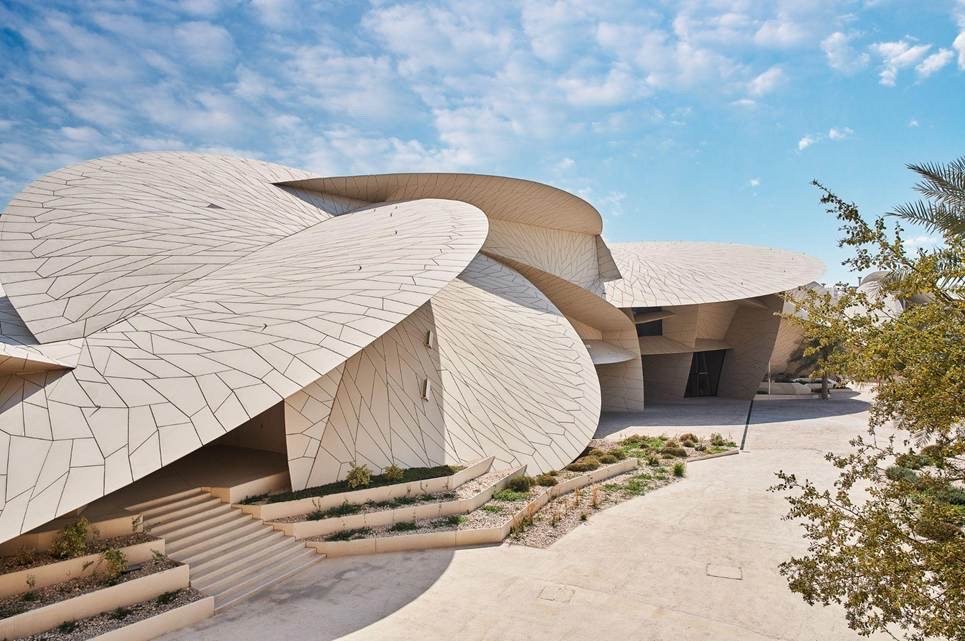
● National Museum of Qatar (NMoQ), designed by architect Jean Nouvel, is distinguished by its striking structure inspired by the “desert rose.” The museum offers an immersive experience that traces Qatar’s history from its geological origins to the present day, through multimedia installations, historical artefacts, and oral testimonies, creating a compelling narrative journey that weaves together memory, identity and future.
● Mathaf: Arab Museum of Modern Art is one of the world’s leading institutions dedicated to modern and contemporary art from the Arab world. Its permanent collection comprises thousands of works documenting the region’s artistic evolution from the 20th century to the present day, complemented by temporary exhibitions, educational programmes and research initiatives that foster cultural dialogue and critical discourse on an international scale.
● Qatar Olympic and Sports Museum is an innovative space entirely dedicated to the history and values of sport. Through interactive technologies, immersive installations and iconic objects, the museum showcases the great stories of global sport and highlights Qatar’s growing role on the international sporting arena, while offering engaging, participatory experiences that actively involve visitors.
● Msheireb Museums: located within the renewed historic district of Msheireb in the heart of Doha, the Msheireb Museums explore Qatar’s social and economic history. The complex comprises four heritage houses, Bin Jelmood House, Company House, Mohammed Bin Jassim House, and Radwani House, now transformed into exhibition spaces dedicated to key moments in the country’s development.
● Lawh Wa Qalam – M. F. Husain Museum, recently inaugurated, is entirely dedicated to the work of the renowned Indian-born modernist Maqbool Fida Husain, who spent much of his career in Qatar from the 1950s until his passing in 2011. Spanning over 3,000 square metres, the museum houses a highly diverse permanent collection, including paintings, films, tapestries, photographs, poetry and installations. What makes this space even more unique is its architectural design, conceived from a sketch by Husain himself: a work of art that takes shape and becomes reality.
Among the upcoming openings planned in the coming years are the following: Dadu – Children’s Museum of Qatar (Doha), Art Mill Museum (contemporary art, scheduled to open around 2030), Lusail Museum (Orientalist art, designed by Herzog & de Meuron), and Qatar Auto Museum (mobility and automotive culture).
Museums are complemented by cultural spaces, galleries and exhibition centres that contribute to a broad and diversified museum offering, capable of attracting international audiences and fostering intercultural dialogue. Among these, Katara Cultural Village hosts several art galleries and exhibition spaces. Located within Katara’s alleys, the Qatar Museums Gallery presents both local and international artists whose work explores themes centred on humanity. The Katara Art Center (KAC) is an independent platform dedicated to contemporary art and interdisciplinary creative practices.
The public art programme is one of the most compelling features of the country’s cultural landscape: more than 80 installations are distributed across Doha, the desert and iconic locations such as the international airport.
Created by leading international and regional artists, these works transform public spaces into a true open-air gallery, accessible and experienced on a daily basis. Among the most iconic installations are:
● East-West/West-East by Richard Serra is located in the Brouq Nature Reserve, in Qatar’s western desert. The installation extends over more than one kilometre across the desert landscape, featuring four monumental steel plates that engage in a dialogue with the horizon.
● The Miraculous Journey by Damien Hirst is located at Sidra Medicine, a hospital and research centre dedicated to women and children. The monumental installation depicts the stages of foetal development through a sequence of sculptures.
● Maman by Louise Bourgeois is located at the Qatar National Convention Centre, at the entrance of the convention complex. The sculpture, a giant bronze spider, is one of the artist’s most iconic works.
● Lamp Bear by Urs Fischer is located inside Hamad International Airport, in the main lobby. It is a monumental sculpture of a yellow teddy bear positioned beneath a lamp, which has become one of the airport’s defining symbols.
● Doha Mountains by Ugo Rondinone is installed near Hamad International Airport. The work consists of large, vertically stacked, coloured boulders that evoke natural forms and surreal landscapes.
● Shadows Travelling on the Sea of the Day by Olafur Eliasson is located in northern Qatar’s desert, near Al Zubarah. The installation consists of a series of circular structures that create shifting patterns of light and shadow across the landscape.
● The Force of Nature II by Lorenzo Quinn is located along the Doha Corniche, the city’s waterfront promenade. The sculpture depicts a suspended female figure commanding the natural elements, symbolising the power of nature.
Public art represents a central element of the country’s cultural vision, fostering interaction between art and communities and helping to make the artistic experience an integral part of everyday life.
An international commitment: participation in the 2026 Venice Biennale
The year 2026 also marks a key milestone in Qatar’s international presence. From May 9th to November 22nd 2026, the country will take part in the 61st International Art Exhibition of the Venice Biennale, one of the most prestigious events on the global art calendar. This participation is part of a broader strategy to strengthen international cultural dialogue and coincides with the development of Qatar’s future permanent national pavilion at the Venice Biennale’s Giardini, a symbol of a long-term presence within the global art landscape.
This trajectory also includes the debut of Art Basel Qatar, held in Doha last February, a new global platform bringing together galleries, artists and collectors from more than 30 countries. Hosted in the creative district of Msheireb, the fair represents a further milestone in the country’s cultural strategy, consolidating its emerging role within the international art landscape.
Culture as a driver of development
Through sustained investment in cultural infrastructure, educational programmes and international collaborations, Qatar reaffirms culture as a strategic driver for social and economic development, promoting an open, contemporary and inclusive vision of national identity. With an ecosystem that integrates iconic museums and a widespread public art programme, the country is today established as a global cultural laboratory, capable of connecting tradition and contemporaneity and offering new perspectives on the role of art in society.