

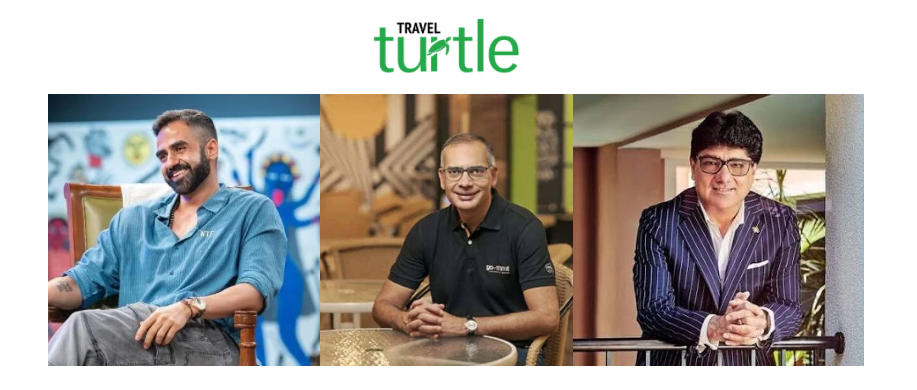
India’s next phase of tourism growth will depend not only on expanding infrastructure and accommodation but also on improving the overall travel experience, according to a discussion featuring entrepreneur Nikhil Kamath, MakeMyTrip Founder and Group Executive Chairman Deep Kalra, and IHCL Managing Director and CEO Puneet Chhatwal.
The conversation, featured in the latest episode of WTF is Travel, examined the challenges preventing India from significantly increasing its international visitor numbers and discussed how the country could move towards the ambition of attracting 100 million foreign tourists.
While India has made considerable progress in airports, highways, rail connectivity and hotel infrastructure, the speakers highlighted the gap that can still exist once travellers reach a destination. Issues such as local transportation, parking, queues, accessibility, public facilities and last-mile connectivity can significantly influence the visitor experience.
Deep Kalra noted that domestic travel remains a major component of MakeMyTrip’s business, with around 95% of its bookings coming from Indian customers and approximately 70% of booking value linked to domestic travel.
The discussion also highlighted an opportunity to develop more boutique, experiential and mid-scale accommodation, particularly properties that combine design and quality with a more accessible price point.
Technology is another area expected to reshape travel. MakeMyTrip’s AI assistant Myra is already handling tens of thousands of voice-based conversations each day, highlighting the potential of conversational technology to simplify travel planning.
For the hospitality sector, Puneet Chhatwal pointed to areas such as revenue management, contracts and back-office operations as potential near-term applications for AI, while emphasising that technology would not replace the human element that remains central to luxury hospitality.
The speakers identified several areas requiring greater attention if India is to significantly expand tourism: providing tourism infrastructure with greater industry recognition, improving last-mile connectivity, strengthening destination marketing, digitising attractions and experiences, and improving coordination between central and state authorities.
They also stressed the need to distribute tourism more widely across the country rather than concentrating visitors in destinations already facing capacity pressures.
The discussion ultimately highlighted that India’s opportunity lies not only in attracting more visitors but in creating better reasons for them to stay longer, explore more destinations and return.